Raneen Al-Zaza
Age 17
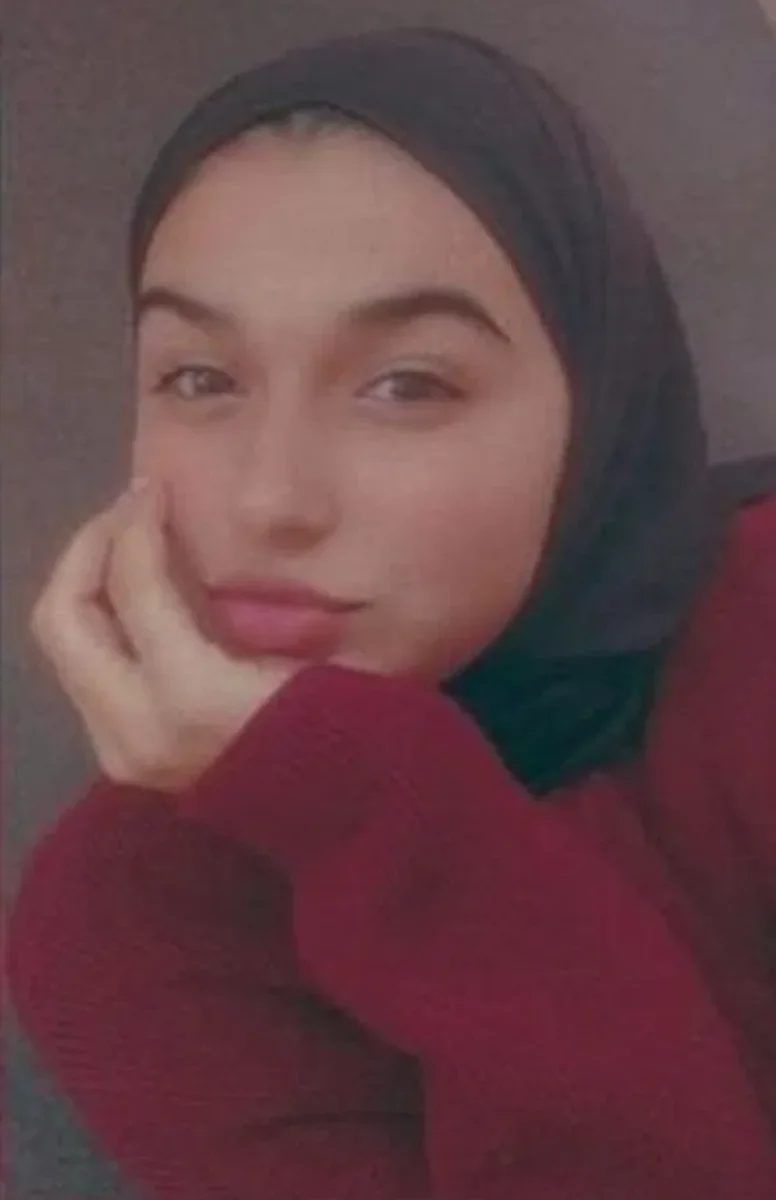
Raneen was 17. She was born on February 21, 2008, and before the war she was a first-year secondary student living in the Shujayea neighborhood. Her friends described her as beautiful, warm, and close to everyone who knew her—the kind of person whose laugh could change the mood of a room. She had a skin condition called mastocytosis that spread across her face, forehead, cheeks, and hands, worsened by the heat of the tent she lived in.
Raneen couldn’t afford a fan. She couldn’t afford treatment. She called herself “Raneenja”—Raneen plus ninja. And she’d say proudly, “I’m a brave girl.” She loved browsing Instagram, drinking Nescafe with her closest friend under the cold night sky in Khan Younis, and she dreamed of becoming a lawyer so she could defend children and women facing violence.
Just before Raneen was murdered, she had finally saved enough to buy an old iPhone. Her aunt said she couldn’t sleep from happiness. She had enrolled in an English language course she never finished, asking people on Twitter if they could help her practice her English. Her WhatsApp status read: “~ Raneen”
Raneen badly wanted to leave Gaza. Her plan was to pass her high school exams, get a scholarship abroad, cross into Egypt through Rafah, and then travel to university in Istanbul, Turkey. When the Rafah border crossing closed, she tried to work with her American friend to be let into America. On July 1, 2025—the day after a 500-lb U.S.-made bomb destroyed Al-Baqa Cafe and killed her cousin’s best friend—Raneen messaged that she was ready to continue sorting evacuation appeal videos: “I hope to leave Gaza for safety, stability, and treatment. So please send me the link, and I will classify again.” She spent the summer of 2025 walking for hours in scorching heat through displacement camps, recording the voices of children and families begging to be allowed to leave. She collected hundreds of these recordings and classified them for an American trying to help families evacuate. She delivered baby milk to starving infants at Rantisi Hospital and Friends of the Patient Hospital before both were destroyed after her murder. She was exhausted, sick, hungry, and terrified. Yet she kept going almost every day. She said: “I don’t like anyone to pity me.” She also said: “I’m afraid of dying. I don’t want to die.”
The Rafah crossing was closed. It had been closed for months. Men invaded Rafah in May 2024, blocking the border road with tanks while families with exit plans waited in tents. Egypt was not allowing free evacuations. Raneen could not afford the racketed fees that brokers charged for unofficial passage—so she tirelessly worked as much as she could to try and let Americans know how desperate people were to flee Gaza. Her skin condition needed a dermatologist that didn’t exist in Gaza. Shortly after she was killed, American politicians banned Palestinian travel to America—a cruel taunt. Almost no child caged in Gaza has been allowed to leave since May 2024. Raneen had no way out. Not through Rafah, not through Egypt, not to Turkey, not to America. Every door was closed.
On September 9, 2025, a missile struck near the door of the tent where Raneen was sleeping, in the Nasr neighborhood. The shrapnel severed her spine and left hand, murdering her. Her mother Reem, her father Mostafa, her 13-year-old brother, and two of their neighbors from the Al-Masris family were also murdered. Her little sister, only 4, was badly injured with metal shrapnel holes in her liver. Her older brother, sixteen, survived. Their mother Reem was critically injured and died approximately two weeks later. Her 16-year-old brother later said their mother had been in so much pain, and was so heartbroken over Raneen, that she wanted to die and be with her. The recordings Raneen helped build—hundreds of voices of children saying where they wanted to go, what they had lost, that they were tired, and that they wanted to live—survive in a Google Drive archive. But Raneen is gone.
Raneen worked tired beyond belief every single day that she could to collect as many recordings as she could from children like her. Not all of them have been translated. She only wanted to leave Gaza. But the majority of people around the world did not care what Raneen wanted. They wanted this young girl to stay and suffer.
The votes that paid for the weapons
Joint Resolution, S.J.Res. 34: Block arms sale to Israel—1000-lb bombs
Joint Resolution, S.J.Res. 33: Block arms sale to Israel—2000-lb bombs (reattempt)
House Bill, H.R. 8034: Israel Security Supplemental Appropriations Act, 2024